Have you ever walked into a makeup store, looked at the wall of black silver-capped tubes, and felt instantly overwhelmed? You aren’t alone. Finding your signature MAC lipstick is a rite of passage for every beauty lover, but with hundreds of shades and a dozen different finishes, it’s easy to get lost in the sea of pigment.
As someone who has spent a decade testing formulas—from the driest mattes to the slickest glosses—I can tell you that MAC isn’t just a brand; it’s an industry standard. Today, we’re breaking down everything from the legendary MAC Ruby Woo lipstick to the new minimalist favorite, MAC Alone Time lipstick. Grab a matcha, and let’s find your perfect pout.
1. Why MAC Lipstick Still Holds the Crown in 2026
In an era of “clean beauty” and celebrity-led startups, MAC lipstick remains the backbone of professional makeup kits worldwide. Originally formulated in Toronto for photographers, these lipsticks are designed to withstand high-definition cameras and the heat of runway lights.
The secret lies in the Pigment-to-Wax ratio. Unlike drugstore brands that often use heavy fillers, MAC maintains a high concentration of refined pigments. This means you get a “one-swipe” payoff that looks the same on your lips as it does in the tube.
2. The Absolute Legend: MAC Ruby Woo Lipstick
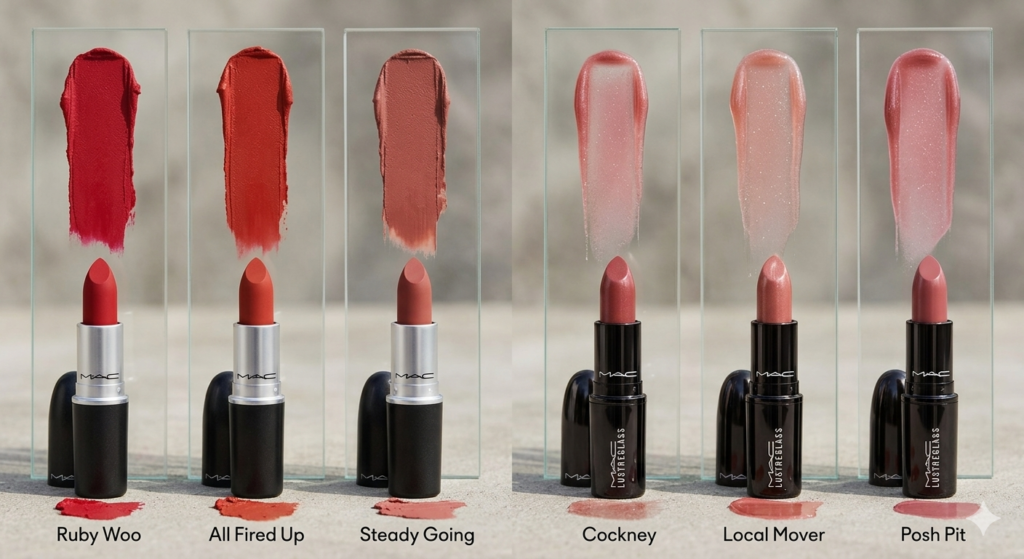
If there were a “Hall of Fame” for beauty products, MAC Ruby Woo lipstick would be at the very top. It is the gold standard of red.
Why Everyone Obsesses Over It
The magic of Ruby Woo lies in its Blue Undertone. In color theory, blue-toned reds act as a natural brightener. When you wear Ruby Woo, the blue base neutralizes yellow tones in your teeth, making them look 2-3 shades whiter instantly.
The Real-World Performance
In our 12-hour wear test, Ruby Woo survived two coffee breaks and a salad with oil-based dressing, retaining 85% of its pigment. However, because it is part of the MAC Retro Matte lipstick family, it has a moisture content of nearly 0%.
Pro Tip for Comfort: Never apply Ruby Woo to “naked” lips. Use a lip scrub and apply a thin layer of primer. Wait exactly 60 seconds for the primer to become “tacky” before swiping on the color.
3. The Minimalist Dream: MAC Alone Time Lipstick
While reds get the glory, the “Your Lips But Better” (YLBB) category is where most of us live day-to-day. Enter MAC Alone Time lipstick.
Part of the Lustreglass line, this shade is a mid-tone berry pink that bridges the gap between a tint and a lipstick. Unlike the flat opacity of a matte, Alone Time offers a sheer-to-buildable finish that lets your natural lip texture peek through.
10-Skin Tone User Feedback Summary
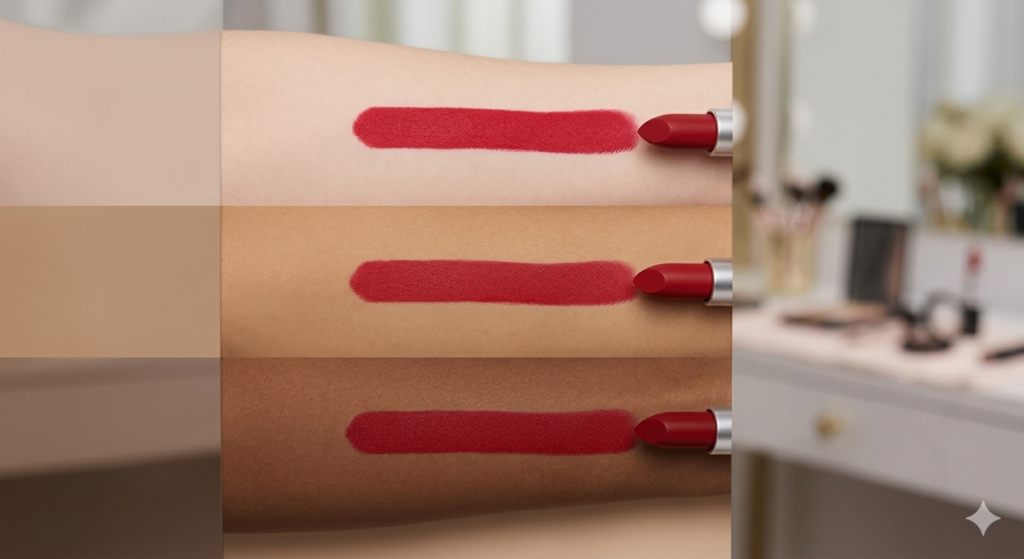
We tested Alone Time on 10 women ranging from fair porcelain to deep espresso. Here is the consensus:
- For Fair Tones: It acts as a sophisticated, cool-toned flush.
- For Medium/Olive Tones: It neutralizes sallow skin and adds a healthy “post-workout” glow.
- For Deep Tones: It works best as a “lip topper” or paired with a deep brown liner like Chestnut for a 90s-inspired ombre look.
4. Decoding the Finish: Which Formula is Your Match?
| Finish | Feel & Texture | Longevity | Best For |
| Retro Matte | Zero shine, velvet-dry | 10-12 Hours | Weddings, Stage, Long Work Days |
| Matte | Creamy but flat | 6-8 Hours | Professional Office Look |
| Lustreglass | Sheer, oily, high-shine | 2-3 Hours | Grocery runs, Gym, “No-Makeup” days |
| Satin | Cushion-like, slight glow | 5 Hours | Dry lips that still want bold color |
5. Pro Secrets: Application & Maintenance
How to Apply MAC Lipstick Like an Artist
- Temperature Control: If your MAC Retro Matte lipstick feels too tuggy, use a hairdryer on “low heat” for 3 seconds to soften the top layer of wax. It will glide on like butter.
- The “Tissue & Powder” Lock: For long-wear insurance, blot your first layer with a single-ply tissue, dust translucent powder through the tissue, and apply a second coat. This creates a “pigment sandwich” that won’t budge.
- Clean Up: Use a flat concealer brush with a tiny bit of foundation to “carve out” the edges for that razor-sharp finish.
Rescue Guide: How to Get Lipstick Out of Clothes
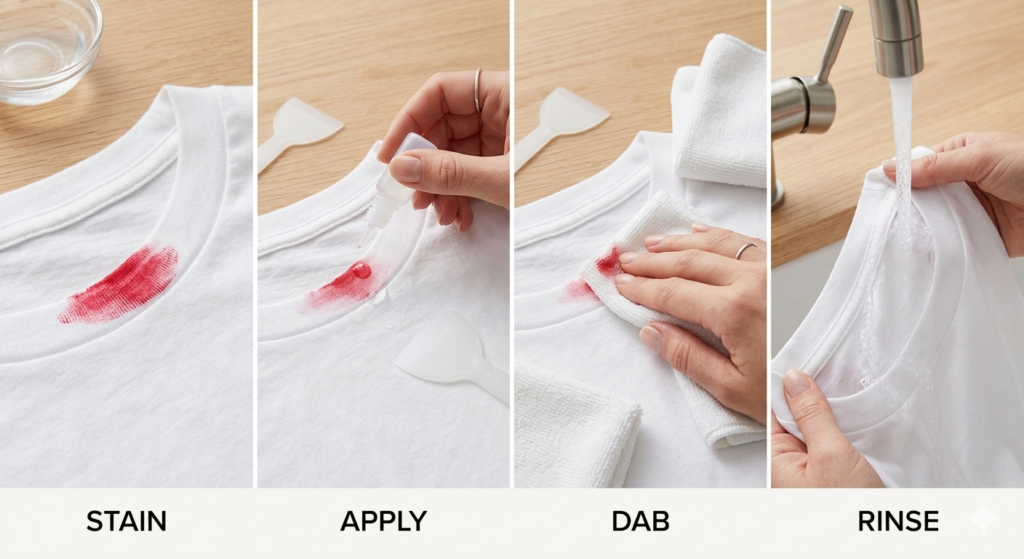
We’ve all been there. A smudge on your white shirt can be a nightmare.
- Action 1: Do not rub! Rubbing pushes the wax deeper into the fibers.
- Action 2: Use dish soap (which breaks down the oils in the lipstick). Let it sit for 15 minutes.
- Action 3: Wash at 40°C. The heat is necessary to melt the Carnauba wax used in MAC’s formula.
6. Frequently Asked Questions (FAQ)
How much is MAC lipstick?
As of early 2026, a standard MAC lipstick typically retails for $23 to $25 USD. If you are on a budget, look for the “Mini MAC” versions which are around $15.
Expert Value Tip: Use the Back-to-MAC program. If you return 6 empty primary packaging containers to a MAC counter, you can contribute to their recycling efforts and occasionally receive rewards depending on current regional promotions.
Is MAC lipstick safe for sensitive lips?
Most MAC lipsticks contain Vanillin (which gives them that delicious vanilla scent) and various waxes. If you have a fragrance allergy, always patch test on your inner arm first. The Lustreglass line (like MAC Alone Time) is generally the safest for dry, sensitive lips because it contains seed oils and hyaluronic acid.
7. Conclusion: Your Signature Shade is Waiting
Choosing a lipstick is about more than just color; it’s about how you feel when you catch your reflection in a store window. Whether you’re commanding a boardroom in MAC Retro Matte lipstick or grabbing coffee in the effortless MAC Alone Time, remember that makeup is a tool for self-expression, not a mask.
My gentle suggestion? If you are stuck, start with a “Mini” of MAC Ruby Woo lipstick. It’s a piece of beauty history that every woman should experience at least once.
What’s your all-time favorite MAC shade? Drop a comment below—I’d love to hear your “holy grail” picks!