
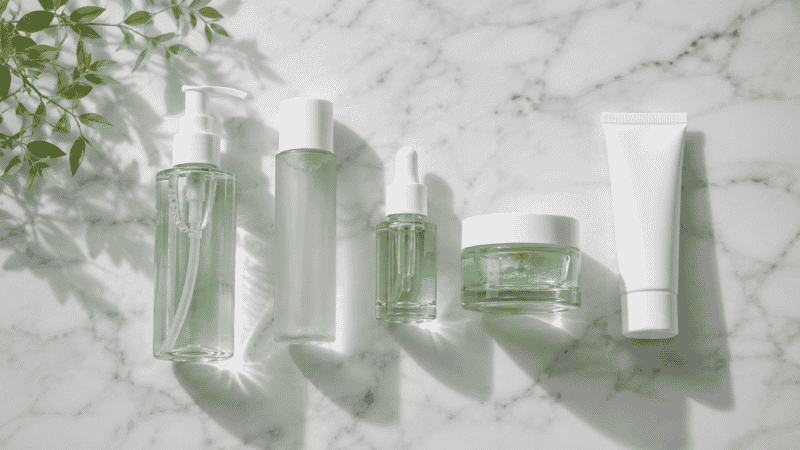
The zone-by-zone approach that actually works — no expensive products required.
Your forehead is shiny by 10am. Your nose could fry an egg by noon. And yet somehow your cheeks feel tight, maybe even a little flaky, like they belong to a completely different person. You’ve tried moisturizing more — but that made the oiliness worse. You’ve tried skipping moisturizer on your T-zone — but then your whole face felt wrong. Nothing quite works, and you’re starting to suspect your skin is just impossible to please.
Here’s what’s actually happening: combination skin isn’t one skin type. It’s two, living on the same face. Your T-zone (forehead, nose, chin) has significantly more oil glands than your cheeks, which is why it behaves completely differently. The mistake most people make is treating their entire face as one unit — using the same product in the same amount everywhere. That approach will always fall short.
This guide covers exactly how to build a skincare routine for combination skin that addresses both areas without making either one worse. All with affordable, widely available products. All without a 10-step routine.
Key Takeaways
- Combination skin has an oily T-zone and normal-to-dry cheeks — treating both areas identically is why most routines fail
- Over-stripping your T-zone with harsh cleansers or skipping moisturizer there actually triggers more oil production
- A lightweight, gel or water-based moisturizer works on combination skin because it hydrates dry areas without adding grease to oily ones
- Serum goes before moisturizer, always — thinnest products first, thickest last
- Sunscreen goes after moisturizer and before makeup — this is non-negotiable for skin health
Do I Actually Have Combination Skin?

Before building a routine, it’s worth making sure you’re actually working with combination skin — because treating the wrong skin type makes everything worse, not better.
The most reliable way to check: wash your face with a gentle cleanser, apply nothing at all, and wait 30 minutes. Then look at your skin honestly in natural light.
If your T-zone (forehead, nose, chin) looks shiny or feels greasy while your cheeks feel normal, slightly tight, or even a little dry — that’s combination skin. According to the American Academy of Dermatology, combination skin is actually the most commonly self-reported skin type, so if this sounds like you, you’re in very good company.
A few other signs:
- Visible pores mostly on your nose and forehead, not your cheeks
- Breakouts that cluster around the T-zone area
- Foundation that slides off your nose but clings to your cheeks
- Feeling like no single moisturizer ever quite works across your whole face
If that last point feels painfully familiar — this routine is built exactly for you.
The Simple Rule Behind All Combination Skin Care
Before getting into products, here’s the principle that makes combination skincare work:
Treat your T-zone and cheeks differently, but use the same products.
You don’t need two separate moisturizers or two separate cleansers. What you need is to adjust how you apply them. More on your dry areas, less on your oily ones. Avoiding alcohol-heavy toners over your whole face when you only need oil control in one zone. Focusing clay masks on your T-zone, not dragging them across your cheeks.
This “zoning” approach is what separates a routine that actually works from one that either overdries your T-zone or over-moisturizes your cheeks.
Editor’s note: The number one mistake I see with combination skin is using a foam or stripping cleanser to control T-zone oil. This feels intuitive — get rid of the oil — but your skin responds to being stripped by producing even more oil to compensate. You end up oilier than you started. Gentle cleansers are genuinely the answer here.
Morning Skincare Routine for Combination Skin
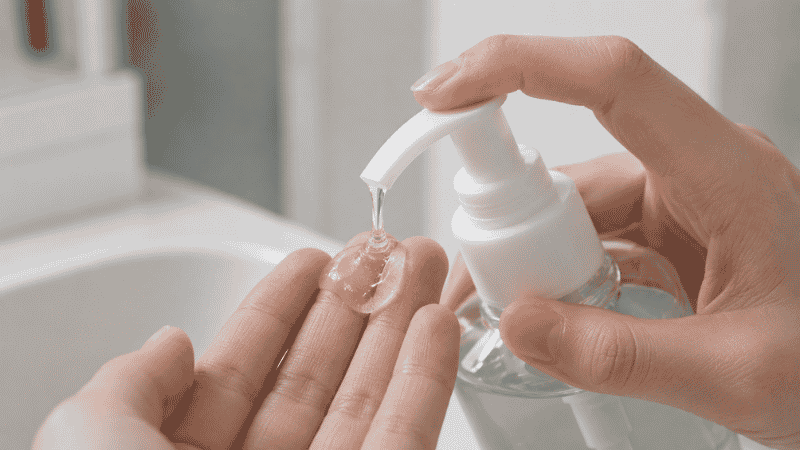
Step 1: Gentle gel or cream cleanser
Skip foam cleansers for combination skin — they’re often too stripping for your dry cheek areas even if they feel satisfying on your T-zone. A gel or milky cleanser that doesn’t foam aggressively removes overnight buildup without triggering the rebound oil production that harsh cleansers cause.
Great affordable options:
- CeraVe Hydrating Facial Cleanser (~$14) — gentle enough for dry cheeks, effective enough for T-zone
- La Roche-Posay Toleriane Hydrating Gentle Cleanser (~$15) — dermatologist-recommended, very balanced
- Neutrogena Ultra Gentle Daily Cleanser (~$9) — widely available, non-stripping
Step 2: Toner (optional, but helpful)
A toner helps balance skin’s pH after cleansing and preps it for the next steps. For combination skin, look for alcohol-free formulas — alcohol-based toners will over-dry your cheeks while you’re targeting your T-zone.
Hydrating toners that contain niacinamide are especially good for combination skin: niacinamide regulates oil production in the T-zone while hydrating drier areas simultaneously. The Good Molecules Niacinamide Toner (~$8) and COSRX AHA/BHA Clarifying Treatment Toner (~$22) are both popular for this skin type.
Apply with a cotton pad swept gently across the whole face, or pat in with your hands.
Step 3: Lightweight serum (where needed)
Serums go before moisturizer — always. Thinnest products first, thickest last. This is how skincare layering works: lighter products need to penetrate before thicker ones seal the surface.
For combination skin, a niacinamide serum addresses both of your main concerns at once. The Ordinary Niacinamide 10% + Zinc 1% (~$7) is one of the most recommended products for this skin type across beauty communities — it regulates sebum in the T-zone, reduces pore appearance, and doesn’t dry out or irritate cheeks.
Apply to your entire face or concentrate slightly more on the T-zone.
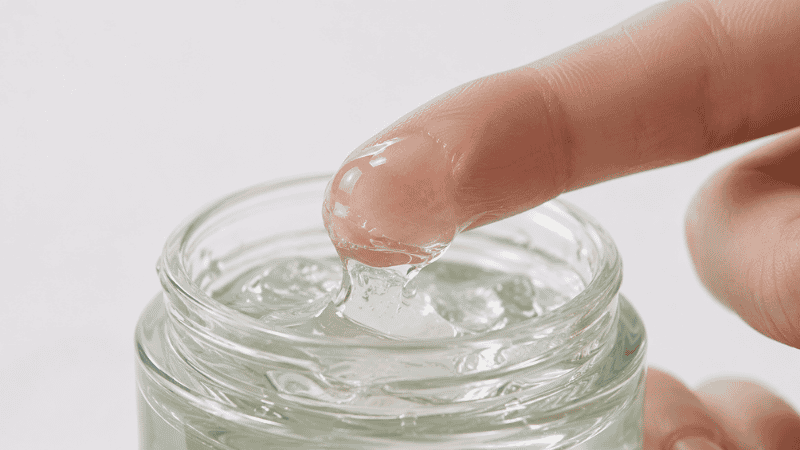
Step 4: Lightweight gel moisturizer
This is the step most combination-skin people get wrong. Many skip moisturizer on their T-zone entirely (because it feels oily enough already) — but dehydrated skin overproduces oil as a compensation mechanism. Moisturizing your T-zone with the right formula actually reduces oiliness over time.
The key is the formula: gel or water-based moisturizers hydrate without adding oil or heaviness. They absorb quickly and leave no greasy residue — perfect for the T-zone — while still providing enough hydration for normal-to-dry cheeks.
Best affordable options:
- Neutrogena Hydro Boost Gel Cream (~$18) — water-based, lightweight, widely loved for combination skin
- CeraVe AM Facial Moisturizing Lotion with SPF (~$16) — combines moisturizer and SPF in one step
- e.l.f. Holy Hydration! Face Cream (~$12) — surprisingly excellent for the price
Step 5: Sunscreen
Sunscreen goes on last in your skincare routine, before makeup. This is non-negotiable — UV damage is the leading cause of premature aging, dark spots, and uneven skin tone, and skipping SPF is the single most counterproductive thing you can do for your skin long-term.
For combination skin, look for sunscreens labeled “oil-free,” “matte finish,” or “gel formula.” These sit comfortably on the T-zone without adding shine.
- EltaMD UV Clear Broad-Spectrum SPF 46 (~$39) — a cult favorite, especially for acne-prone and combination skin
- Neutrogena Clear Face Liquid Lotion Sunscreen SPF 55 (~$14) — lightweight, non-greasy, drugstore accessible
- La Roche-Posay Anthelios Clear Skin SPF 60 (~$34) — designed specifically for oily and combination skin
Night Skincare Routine for Combination Skin
Your nighttime routine can be slightly more focused on treatment and deeper hydration, since you’re not applying SPF or makeup on top.
Step 1: Double cleanse (on heavy makeup days)
If you wore sunscreen and makeup during the day, start with a micellar water or cleansing balm to remove them, then follow with your regular gel cleanser. This two-step process ensures nothing is left behind that could clog pores overnight.
On bare-face days, your regular cleanser once is enough.
Step 2: Treatment serum or exfoliant (2-3x per week)
This is where you address specific combination skin concerns — visible pores, texture, occasional breakouts.
A BHA (salicylic acid) exfoliant is particularly effective for combination skin because it’s oil-soluble, meaning it cuts through sebum and clears pores — exactly what your T-zone needs. Use it 2-3 times per week, not daily.
- Paula’s Choice Skin Perfecting 2% BHA Liquid Exfoliant (~$35) — the most recommended BHA in skincare communities, very effective for pores and texture
- The Ordinary Salicylic Acid 2% Solution (~$7) — much more affordable, effective for mild concerns
Apply only to areas that need it — primarily your T-zone — and skip your dry cheek areas if they’re sensitive.
Step 3: Slightly richer moisturizer at night
At night, you can go slightly heavier on the cheeks if they feel dry. A thin layer of a richer cream on the cheeks only, while keeping your T-zone with just the lightweight gel moisturizer — this is zoning in action.
The CeraVe Moisturizing Cream (~$16) works beautifully for this — use it on dry cheeks at night, your gel moisturizer everywhere during the day.
Serum Before or After Moisturizer?
Serum always goes before moisturizer. The rule: apply products from thinnest to thickest consistency.
Serums are thin, concentrated formulas designed to penetrate deeply into skin. If you apply moisturizer first, the thicker formula creates a barrier that prevents the serum from absorbing properly. Serum first means it reaches where it needs to go; moisturizer on top seals everything in.
The full order: cleanser → toner → serum → moisturizer → SPF (morning only).
Sunscreen Before or After Moisturizer?
Sunscreen goes after moisturizer, as the final step in your skincare routine and before any makeup.
The logic: moisturizer prepares and hydrates skin; sunscreen creates a protective layer on top. Applying sunscreen before moisturizer means the moisturizer disrupts and dilutes the SPF filter, reducing how much protection you actually get.
One exception: if your moisturizer already contains SPF (like CeraVe AM Moisturizing Lotion SPF 30), you can use that as a combined step — but check that the SPF is at least 30 and apply generously.
Skincare Routine for Combination Skin in Summer vs Winter
Combination skin often shifts with the seasons — and adjusting your routine slightly is worth it.
Summer: Your T-zone will likely be oilier in heat and humidity. You may want to skip the richer night moisturizer entirely and stick with your lightweight gel year-round. A mattifying sunscreen becomes even more important. If you’re breaking out more in summer, increase your BHA exfoliant to 3x per week.
Winter: Cold air pulls moisture from skin, which often makes the dry-cheek side of combination skin worse. Add a richer moisturizer for your cheeks specifically in the evening. A hydrating toner or essence between your cleanser and serum adds an extra layer of hydration that helps buffer against dryness without overwhelming your T-zone.
What If Your Routine Isn’t Working?
T-zone is still very oily: Check your cleanser — if it’s foaming or contains alcohol, switch to a gentle gel formula. Also check whether you’re moisturizing your T-zone at all. Paradoxically, skipping moisturizer there often makes oiliness worse.
Cheeks still feel dry and tight: Your moisturizer may not be rich enough for your cheeks. Try applying a slightly thicker cream specifically to your cheeks only, both morning and evening, rather than using your lightweight gel everywhere.
Breaking out on the T-zone: Introduce a salicylic acid product 2-3x per week, applied only to the T-zone. Check that your sunscreen and moisturizer are labeled non-comedogenic.
Products are pilling (balling up on skin): You’re not letting each layer absorb before applying the next. Give each product 30-60 seconds to sink in before layering. Also check if your silicone-based primer is incompatible with your serum — this is a common pilling cause.
When to See a Dermatologist
If you’re experiencing persistent, painful breakouts that don’t respond to over-the-counter products, significant skin texture issues, or skin that feels irritated and reactive to most products, it’s worth consulting a dermatologist. These can be signs of conditions like rosacea, perioral dermatitis, or hormonal acne that require prescription treatment rather than routine adjustments.
FAQ
How do I know if I have combination skin?
Wash your face and wait 30 minutes without applying anything. If your T-zone (forehead, nose, chin) looks shiny or feels greasy while your cheeks feel normal, dry, or tight — that’s combination skin. If everywhere is oily, you likely have oily skin. If everywhere feels tight, you likely have dry skin.
What moisturizer is best for combination skin?
A lightweight, gel or water-based moisturizer that absorbs quickly without leaving residue. Look for formulas labeled “oil-free,” “non-comedogenic,” or “gel cream.” The Neutrogena Hydro Boost Gel Cream is one of the most consistently recommended options across skin types including combination.
Should I moisturize my oily T-zone?
Yes — skipping moisturizer on your T-zone often makes oiliness worse, not better. When skin is dehydrated, it overproduces oil to compensate. A lightweight, oil-free gel moisturizer hydrates the T-zone without adding shine and can actually reduce oiliness over time.
Does serum go before or after moisturizer?
Serum goes before moisturizer, always. Apply products from thinnest to thickest — cleanser, toner, serum, moisturizer, sunscreen. Applying moisturizer first prevents serums from absorbing properly.
What’s the best cleanser for combination skin?
A gentle, non-foaming gel or milky cleanser that removes oil without stripping. Avoid harsh foaming cleansers and anything containing alcohol — these over-dry your cheeks and trigger rebound oil production in your T-zone. CeraVe Hydrating Facial Cleanser and La Roche-Posay Toleriane are both excellent and affordable options.
Combination Skin Isn’t Complicated — It Just Needs a Bit of Strategy
Once you stop treating your face as one uniform surface and start thinking in zones, everything clicks into place. Gentle cleanser, a niacinamide serum, lightweight gel moisturizer, and SPF. That’s the morning routine. A BHA exfoliant two or three times a week at night. A slightly richer cream on your dry cheeks in winter.
It doesn’t need to be expensive or elaborate. It just needs to be consistent.
Keep building your routine on MyColorKiss:
- Natural Makeup Look Tutorial — how to apply makeup on top of prepped combination skin
- How to Apply Foundation for Beginners — foundation tips specifically helpful for combination skin
- Makeup Steps in Order — where skincare ends and makeup begins
And remember — combination skin isn’t a problem to fix. It’s just a skin type to understand. Once you do, it’s actually one of the easier types to manage.
References: American Academy of Dermatology Association. Skin care for different skin types. https://www.aad.org/public/everyday-care/skin-care-basics/skin/skin-care-for-your-skin-type Draelos ZD. The science behind skin care: Cleansers. Journal of Cosmetic Dermatology. 2018;17(1):8-14.