

Buying a vitamin C serum is easy. Figuring out when to use it is where most beginners get stuck.
Search online and you’ll find completely different answers. Some skincare routines say vitamin C belongs in the morning because it works alongside sunscreen. Others recommend using it at night to avoid irritation or makeup pilling. With so much conflicting advice, it’s hard to know which approach is actually right.
Here’s the simple answer: vitamin C serum can be used in the morning or at night. The best choice depends on your skin, your routine, and the products you’re already using. This guide covers everything beginners need to know—from choosing the right time to layering vitamin C with sunscreen, makeup, retinol, and other active ingredients without irritating your skin.
Quick Answer: Morning or Night?
Best overall choice: use your vitamin C serum in the morning, followed by moisturizer and a broad-spectrum SPF 30+. This is the classic routine because vitamin C is an antioxidant, and mornings are when your skin is about to face the most environmental stress — sun, pollution, screen time, all of it.
That said, night works just as well if mornings aren’t cooperating. Switch to nighttime use if the serum causes irritation, feels sticky, or makes your foundation pill halfway through your commute.
A few quick rules to keep in your back pocket:
- Apply after cleansing, before moisturizer.
- Start with once a day at most — even two to four times a week is plenty for beginners.
- If your skin is sensitive, look for a gentler vitamin C derivative rather than a strong pure form.
- Vitamin C supports your sunscreen. It does not replace it. Ever.
Should You Use Vitamin C Serum in the Morning or at Night?
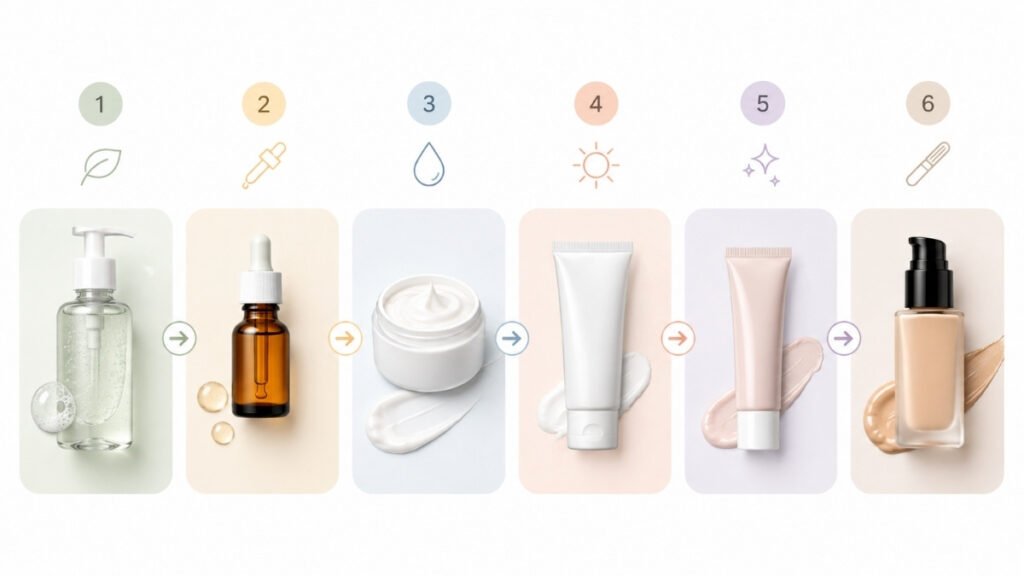
This is usually the first decision beginners have to make after opening a new bottle of vitamin C serum. Some people automatically add it to their morning routine, while others save it for nighttime because they’re worried about irritation, sunscreen, or makeup pilling.
The truth is, both options can work well. The better choice depends on your skin, your daily routine, and whether vitamin C fits more naturally before you head out the door or as part of your evening skincare routine.
Morning tends to be the go-to because vitamin C is an antioxidant, meaning it helps your skin cope with the daily buildup of environmental stress. It pairs naturally with sunscreen, and a lot of people like the idea of “loading up” on protection before they leave the house.
Nighttime becomes the smarter option when:
- Your morning routine is already a five-minute scramble.
- The serum pills under sunscreen or foundation no matter what you try.
- The texture feels heavy, sticky, or greasy for daytime wear.
- Your skin gets irritated or reactive specifically during the day.
It’s worth saying clearly: using vitamin C at night isn’t a downgrade. It’s simply a different routine, and for a lot of beginners, it’s actually the easier one to stick with — no makeup compatibility to worry about, no rushing.
One thing that trips a lot of people up is assuming more is better. Twice-daily use isn’t necessary for most skin types and can actually increase the odds of irritation. Once a day, or even a few times a week while you’re getting started, is the more realistic approach.
A simple decision rule:
- Want daytime antioxidant support → morning
- Sensitive skin or makeup issues → night
- Already using retinol → vitamin C in the morning, retinol at night
- Mornings are chaos → just move it to your evening Morning Skincare Routine instead
Why Morning Use Is Usually Recommended
Morning application lines up with when your skin needs antioxidant support most, and it slots naturally into a routine that already ends with sunscreen.
When Nighttime Use Is the Better Choice
If pilling, stickiness, or irritation keeps showing up during the day, moving vitamin C to your evening routine removes the problem without losing the benefit.
Can You Use Vitamin C Twice a Day?
Technically yes, but it’s not necessary for most people. Starting with once a day (or a few times a week) lets you judge how your skin actually responds before adding more.
| Comparison | Morning Use | Night Use |
|---|---|---|
| Main benefit | Daytime antioxidant support | Supports overnight skin recovery |
| Sunscreen requirement | Still required, non-negotiable | Not needed right after application |
| Makeup compatibility | Can pill under foundation for some skin types | No makeup to worry about |
| Irritation risk | Slightly higher with sun/heat exposure | Usually lower, especially for sensitive skin |
| Best suited for | Steady routines, minimal makeup issues | Sensitive skin, rushed mornings, makeup pilling |
Morning is the usual first choice, but nighttime use is better if it makes your routine easier, gentler, and something you’ll actually keep up with.
How to Layer Vitamin C Serum With Sunscreen in the Morning
Antioxidants like vitamin C work by helping your skin manage “free radicals” — the unstable molecules created by sun exposure, pollution, and general daily wear and tear. Since your skin deals with the most of this during the day, morning use is where vitamin C gets to do its job.
But here’s the part beginners mix up constantly: vitamin C and sunscreen are not interchangeable. Vitamin C doesn’t block UVA or UVB rays — it’s not designed to. Sunscreen is still the only thing standing between your skin and sun damage, so broad-spectrum SPF 30+ stays essential no matter how good your serum is.
There’s also a common misconception worth clearing up: vitamin C is not generally considered a photosensitizing ingredient, so using it in the morning doesn’t automatically make you tan or burn faster. What actually causes sun damage is skipping or skimping on sunscreen — not the serum itself.
A simple morning order:
- Cleanser
- Vitamin C serum
- Moisturizer
- Sunscreen
If layering all four feels like too much some mornings, that’s fine — keep it minimal and prioritize sunscreen over the extra steps.

How Vitamin C Supports Daytime Skin Protection
It helps your skin manage the antioxidant load from sun and pollution exposure throughout the day, working alongside — not instead of — your other protective steps.
Why Vitamin C Cannot Replace Sunscreen
Vitamin C doesn’t filter or block UV rays. Sunscreen does. Skipping SPF because you applied vitamin C is one of the most common (and riskiest) beginner assumptions.
Does Vitamin C Make Skin Sensitive to the Sun?
Not typically. Vitamin C isn’t classified as photosensitizing, so it’s generally safe for daytime use as long as sunscreen is part of the routine.
Why Vitamin C Pills Under Makeup—and How to Prevent It
Few skincare problems are as frustrating as watching your foundation start to roll into tiny flakes just minutes after you’ve applied it. Because vitamin C is often one of the first products in a morning routine, it’s easy to blame the serum when pilling happens.
More often, pilling happens because of how products are layered, how much is applied, or how quickly one step follows the next. A few simple adjustments can make the difference between a smooth makeup finish and a routine that never seems to work.

Correct layering order:
- Gentle cleanser
- Vitamin C serum
- Lightweight moisturizer
- Sunscreen
- Primer (if you use one)
- Foundation
Apply in order from lighter to richer textures, and resist the urge to use extra product thinking it’ll work better — two to three drops of serum is usually plenty for the whole face. Apply to skin that’s dry or nearly dry unless the label says otherwise, and press products in gently rather than rubbing them back and forth.
Give products a moment to settle:
- Vitamin C: about one to three minutes
- Sunscreen: let it set before foundation goes on
It’s surprisingly common for pilling to show up specifically around the nose, chin, and hairline — areas where product tends to collect and where skin texture makes absorption slower. If you notice pilling only in these spots, it’s often more about technique than the products themselves.
Common causes of pilling:
- Too many layers at once
- Using more product than needed
- Mixing several gel or film-forming formulas
- Rubbing after products have started to set
- Sunscreen, primer, and foundation textures that don’t mesh well
Troubleshooting order (try in this sequence):
- Use less product
- Cut one unnecessary step
- Let sunscreen fully set before foundation
- Apply foundation in thin layers
- If pilling continues, move vitamin C to your nighttime routine instead
The Correct Morning Layering Order
Cleanser, vitamin C, moisturizer, sunscreen, then makeup — lightest to richest, always.
How Long Should You Wait Between Products?
A minute or two after vitamin C, and enough time for sunscreen to set before foundation goes on. Rushing this step is one of the biggest pilling triggers.
What to Do if Vitamin C Pills Under Makeup
Cut back on product amount and unnecessary layers first. If pilling still happens after that, it’s a sign to switch vitamin C to nighttime use.
No-Pilling Morning Routine Checklist
- [ ] Use a small amount of product
- [ ] Avoid stacking too many gel-based layers
- [ ] Press products in — don’t rub
- [ ] Let sunscreen fully set
- [ ] Apply foundation in thin layers
- [ ] Move vitamin C to night if pilling keeps happening
The easiest way to prevent pilling is using less product, cutting unnecessary steps, and never rubbing products that have already started to set.
Can You Use Vitamin C With Retinol, Niacinamide, and Other Active Ingredients?
Once vitamin C becomes part of your routine, the next question is usually what comes next. Can you still use retinol? What about niacinamide or exfoliating acids? With so many active ingredients promising brighter, smoother skin, it’s easy to assume they should all be layered together.
Most ingredients can be used alongside vitamin C, but they don’t all need to be applied at the same time. For beginners, separating stronger actives between morning and evening routines is often the simplest way to get the benefits while reducing the risk of irritation.
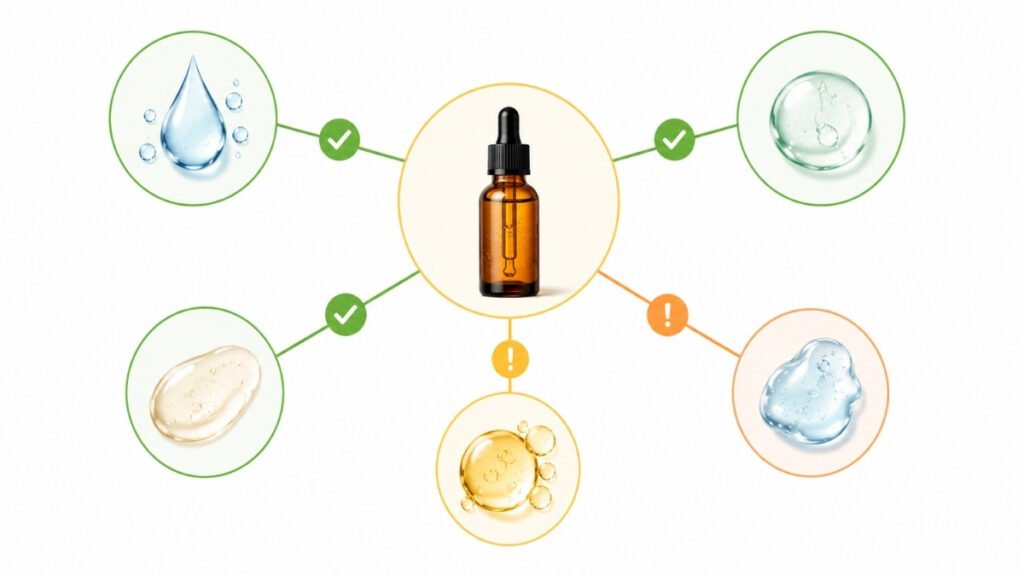
Vitamin C + Hyaluronic Acid Generally compatible. Apply in order of texture, thinnest to thickest. Hyaluronic acid can also help offset any dryness vitamin C might cause.
Vitamin C + Niacinamide Most modern formulas play well together. If you’re managing dark spots and want to know how niacinamide fits into that same routine, our Niacinamide for Dark Spots guide breaks down timing in more detail. If your skin is on the sensitive side, though, splitting these into separate morning/night routines is a safe default.
Vitamin C + Retinol Beginners do best keeping vitamin C in the morning and retinol at night. Avoid introducing both as new products at the same time — you won’t be able to tell which one is causing a reaction if something goes wrong.
Vitamin C + AHA/BHA Combining these can increase stinging, dryness, or peeling. It’s smarter to separate them by time of day or alternate which days you use each one.
A general safety net: avoid stacking vitamin C, retinol, and exfoliating acids all in the same routine, especially as a beginner. One common mistake is reaching for a “glow-boosting” routine that layers three or four actives at once — and then not being able to tell which one caused the redness that follows.
Signs you’ve overdone it:
- Persistent redness
- Burning
- Peeling
- Tightness
- Increased overall sensitivity
If this happens: pause the strong actives, go back to just cleanser, moisturizer, and sunscreen for a few days, then reintroduce one active at a time slowly.
| Combination | Can They Be Combined? | Best Timing | Beginner Recommendation |
|---|---|---|---|
| Vitamin C + Hyaluronic Acid | Yes | Same routine, thin to thick | Safe to layer |
| Vitamin C + Niacinamide | Usually | Same routine or split AM/PM | Separate if sensitive |
| Vitamin C + Retinol | Yes, but split by time | Vitamin C AM, retinol PM | Never introduce both at once |
| Vitamin C + AHA/BHA | With caution | Alternate days or split AM/PM | Separate as a beginner |
Beginners are usually better off separating strong active ingredients rather than trying to use everything in one routine at once.
Which Vitamin C Serum Is Best for Beginners?
Walk into any beauty store or browse online for a few minutes, and you’ll quickly realize there isn’t just one type of vitamin C serum. Some formulas focus on high percentages, others promote gentle vitamin C derivatives, and many claim to be suitable for every skin type.
In reality, beginners usually benefit more from a formula that’s stable, easy to tolerate, and comfortable enough to use consistently than from the highest concentration on the shelf.
L-Ascorbic Acid (pure vitamin C) has the strongest research backing but is also the least stable and most likely to sting, often requiring a low-pH formula to work effectively.
Vitamin C derivatives (like sodium ascorbyl phosphate or ascorbyl glucoside) tend to be more stable and gentler, making them a solid pick for sensitive skin and beginners. They also tend to sit better under makeup.
Beginner concentration guidance: start with a lower-strength formula or a gentle derivative. Jumping straight to 15–20% pure vitamin C is a classic overzealous-beginner move, and higher concentration doesn’t automatically mean better results — it usually just means a higher chance of irritation.
What to check for in an affordable formula:
- Opaque or dark packaging (protects against light degradation)
- An air-restrictive pump or well-designed dropper
- A bottle size you’ll realistically finish before it oxidizes
- A lightweight texture if you wear makeup
- Low or no fragrance if your skin is sensitive
- Clear storage instructions on the label
Choose based on your routine:
- Wear makeup daily → fast-absorbing, lightweight texture
- Sensitive skin → gentle derivative or lower concentration
- Using it at night → a slightly richer texture is fine
- Tight budget → prioritize stability and a bottle size you’ll actually use up
It’s a genuinely common experience to buy a big, cheap, high-concentration bottle thinking it’s the better deal — only to watch it turn orange in the drawer before you’re even halfway through it. Smaller bottles from stable formulas are often the better value, even if the price-per-ounce looks worse on paper.
Pure Vitamin C vs Vitamin C Derivatives
Pure vitamin C offers stronger research support but is less stable and more irritating. Derivatives are gentler, more stable, and generally easier to build a routine around.
What Strength Should Beginners Start With?
A lower concentration or a gentle derivative. There’s no rush to go stronger — consistency matters more than potency when you’re just starting out.
What to Look for in a Budget Formula
Stable packaging, a reasonable bottle size, and a texture that fits your routine matter more than chasing the highest percentage on the label.
| Comparison | Pure Vitamin C | Vitamin C Derivatives |
|---|---|---|
| Stability | Lower, oxidizes faster | Higher, lasts longer |
| Irritation level | Higher | Lower |
| Texture | Can feel sticky or thin | Often lightweight |
| Makeup compatibility | Mixed, depends on formula | Usually smoother under makeup |
| Best user | Experienced skincare users | Beginners, sensitive skin |
| Budget value | Higher waste risk if unused quickly | Better long-term value for most beginners |
The best beginner vitamin C serum isn’t the strongest one — it’s the one that stays stable, feels comfortable, and actually fits your day-to-day routine.
How to Tell if Your Vitamin C Serum Has Gone Bad
At first, your vitamin C serum looked almost clear or pale yellow. Then one day you notice it’s turned darker, and it’s hard to tell whether that’s completely normal or a sign it’s time for a new bottle.
While some color change is expected over time, darker shades can be a sign that the serum has oxidized and is no longer as effective. Learning what those changes mean can help you get the most out of every bottle.
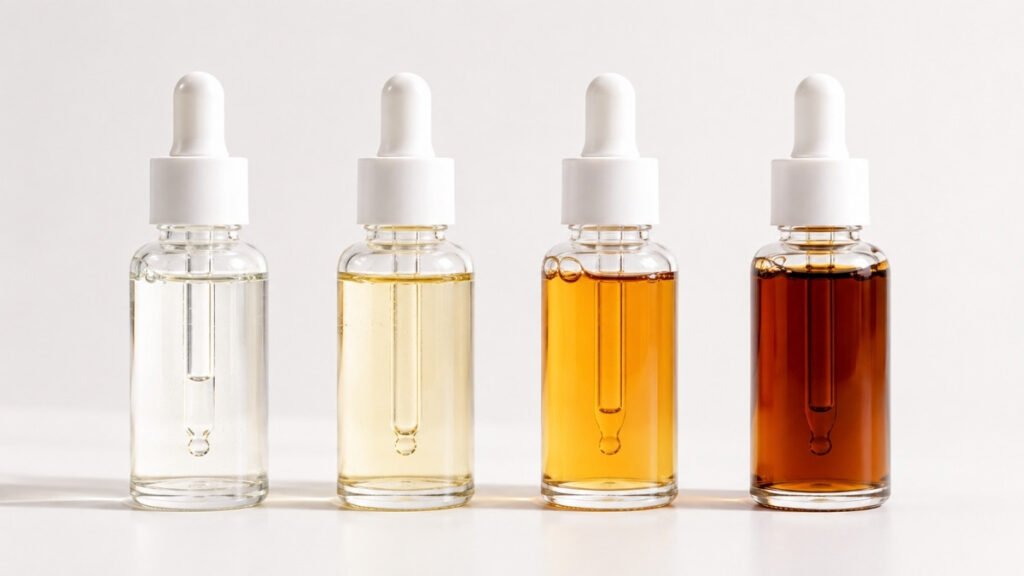
Color guide:
- Clear or very pale yellow — generally still fresh
- Noticeably yellow — starting to oxidize; check the brand’s guidance
- Amber or dark orange — significantly oxidized
- Brown — usually time to toss it
Other warning signs include an unusual smell, a texture that’s changed since you bought it, damaged or leaking packaging, or irritation that’s suddenly worse than it used to be.
Oxidized vitamin C tends to lose effectiveness and can leave a yellow or orange residue — sometimes staining hands, nails, or the hairline. That orange or yellow tint on skin is usually one of a few things: the product itself oxidizing, applying too much, leftover residue near the brows or hairline, or simply not washing hands after application.
To help prevent staining: use less product, spread it evenly, let it fully absorb, and wash your hands afterward.
Storage tips: keep the bottle away from direct sunlight, avoid leaving it on a hot windowsill, skip storing it in a humid bathroom if you can help it, close the cap right after use, and follow any refrigeration guidance on the label. If you only use vitamin C a few times a week, a smaller bottle is usually the smarter buy than a large one that outlasts its shelf life.
It’s a pretty common lesson people learn the hard way: a serum left on a sunny windowsill or in a steamy bathroom can turn from pale yellow to noticeably orange within just a few weeks. Once it’s deeply oxidized, using it “just to not waste it” isn’t doing your skin any favors.
Vitamin C Oxidation Color Guide
Track the color, not the calendar — a serum’s appearance tells you more about whether it’s still good than the date on the box.
Why Vitamin C Can Turn Skin or Hands Orange
It’s usually a mix of oxidized product, using too much, or not washing hands after application — rarely a sign that something is wrong with your skin.
How to Store Vitamin C Serum Properly
Cool, dark, and dry, with the cap closed tightly right after each use.
| Color | Likely Condition | Recommended Action |
|---|---|---|
| Clear / very pale yellow | Fresh | Safe to use |
| Noticeably yellow | Starting to oxidize | Check brand guidance, use soon |
| Amber / dark orange | Significantly oxidized | Consider replacing |
| Brown | Oxidized | Time to discard |
Vitamin C Storage Checklist
- [ ] Store away from direct light
- [ ] Avoid heat and humidity
- [ ] Close the bottle immediately after use
- [ ] Check the color regularly
- [ ] Don’t keep using a deeply oxidized serum
Dark orange or brown vitamin C is usually no longer worth using, and proper storage can significantly slow down oxidation.
The Most Common Vitamin C Mistakes—and How to Avoid Them
Most vitamin C problems don’t happen because the ingredient doesn’t work—they happen because of small mistakes that are easy to overlook. Using too much, layering too many active ingredients, or expecting instant results can all make a good product seem disappointing.
The good news is that once you know what to avoid, building a simple routine becomes much easier.

Mistakes that cause irritation:
- Starting with a very high concentration right away
- Applying daily before testing tolerance
- Layering vitamin C with retinol and exfoliating acids all at once
- Continuing to use it despite persistent burning or peeling
- Introducing several new active ingredients at the same time
Mistakes that cause pilling or staining:
- Using too much product
- Rubbing products in after they’ve started to set
- Using oxidized, dark orange or brown serum
- Storing the bottle in direct sunlight or heat
Mistakes that waste money:
- Expecting instant brightening results
- Switching products too quickly before giving your skin time to adjust
- Treating vitamin C as a sunscreen replacement
- Forcing morning use even when it consistently ruins your makeup
- Assuming nighttime use is somehow “less effective”
One common mistake that shows up again and again: in the rush to see brighter skin faster, beginners increase concentration, increase frequency, and add an exfoliating acid all in the same week — and end up having to pause every active ingredient just to let their skin recover. Slower and steadier really does win here.
Vitamin C Beginner Do and Don’t Checklist
- [ ] Do start low and slow with concentration and frequency
- [ ] Do wear sunscreen every single day, vitamin C or not
- [ ] Do introduce new actives one at a time
- [ ] Don’t rub product in after it starts to set
- [ ] Don’t keep using oxidized, dark serum
- [ ] Don’t expect overnight brightening
Most vitamin C problems come down to using too much, combining too many actives at once, or choosing a formula that doesn’t fit the routine.
FAQ
Should I apply Vitamin C serum in the morning or at night? Either works — morning is the more common choice for daytime antioxidant support, while night is a great alternative if it causes irritation or makeup issues during the day. Pick whichever one you’ll actually stick with consistently.
Is it better to use Vitamin C serum at night if it causes irritation or pilling under makeup in the morning? Yes. If mornings keep causing problems, switching to a nighttime routine removes the makeup and sun-exposure variables entirely, without losing the benefit of the serum.
How do I layer Vitamin C with Retinol and exfoliants without damaging my skin barrier? Keep vitamin C in the morning and retinol at night, and separate exfoliating acids onto different days or times. Introduce new actives one at a time so you can tell what’s causing any reaction.
Does Vitamin C serum make your skin more sensitive to the sun during the day? Not typically — vitamin C isn’t considered a photosensitizing ingredient. Sunscreen is still essential regardless of when you apply vitamin C.
How long should I wait after applying Vitamin C serum before applying sunscreen and foundation? Give it about one to three minutes to absorb before moving to the next step, and let sunscreen fully set before applying foundation to reduce pilling.
Why does Vitamin C serum make my skin or hands turn yellow or orange, and how can I prevent it? This usually comes from oxidized product, using too much, or not washing your hands after application. Use less product, spread it evenly, and wash hands afterward to help prevent staining.
How can I tell if my Vitamin C serum has oxidized and is no longer safe to use? Check the color: pale yellow is fine, noticeably yellow means it’s starting to turn, and amber, dark orange, or brown means it’s time to replace it.
What affordable Vitamin C derivatives or formulas work best for beginners with sensitive skin? Look for gentle derivatives like sodium ascorbyl phosphate or ascorbyl glucoside in stable, opaque packaging. These tend to be more comfortable and more budget-friendly to actually use up before they oxidize.
Final Thoughts
The question “vitamin c serum morning or night” doesn’t have a single answer—and that’s perfectly okay. Morning is a great choice for anyone who likes pairing vitamin C with sunscreen, while nighttime often fits better into routines that include makeup, retinol, or sensitive skin.
Great skincare rarely comes from finding the “perfect” schedule. It comes from using a formula your skin enjoys, applying it the right way, and sticking with it long enough to see the results. A routine that feels simple enough to repeat every day will always be more rewarding than one that’s too complicated to maintain.
🏠 Behind This Guide
Buying a vitamin C serum is easy. Figuring out when to use it, how to layer it, and what actually matters is where many beginners get stuck.
That’s why this guide focuses on the questions that come up most often after opening that first bottle—not complicated skincare theory, but the everyday decisions that shape a routine.
This guide is built around four essentials:
- ☀️ Morning or Night — Choosing the timing that fits your skin and daily routine.
- 🧴 Layering Made Simple — Using vitamin C with sunscreen, makeup, and other skincare without confusion.
- ✨ Beginner-Friendly Choices — Picking a formula that’s gentle, affordable, and easy to use consistently.
- 💛 Building Lasting Habits — Avoiding common mistakes so your routine stays simple instead of overwhelming.
Because good skincare isn’t about following every trend.
It’s about finding a routine you’ll still enjoy using months from now.
✨ Continue Your Skincare Journey
Great skin isn’t built around one product alone. These beginner-friendly guides will help you understand sunscreen, nighttime skincare, retinol, and healthy skincare habits so every step of your routine works better together.
- Does Sunscreen Prevent Tanning — Understand how sunscreen protects your skin, why tanning can still occur, and how to get the best protection every day.
- Night Skincare Routine — Create a relaxing evening routine that helps your skin recover overnight while keeping your skincare simple and consistent.
- How to Get Glass Skin — Learn the daily skincare habits that support smoother, brighter, and healthier-looking skin without overcomplicating your routine.
- Retinol for Beginners — Everything you need to know before adding retinol to your routine, including how to combine it with vitamin C safely.
❤️ A Final Note
Beautiful makeup and healthy-looking skin don’t come from buying more products—they come from building simple habits that work for you.
At MyColorKiss, we’re here to make beauty feel less overwhelming. With beginner-friendly tutorials, practical beauty tips, and affordable product recommendations, we help you avoid common mistakes and build confidence one step at a time.
Because beauty should be simple, affordable, and made for real life.