
The jawline test, the undertone shortcut, the oxidation problem — all of it explained simply.
You bought a foundation. It looked right in the store. You applied it at home, stepped outside, and caught your reflection in a shop window — and the person looking back had a noticeably different face color than their neck. Or it looked fine when you applied it but turned progressively more orange throughout the day. Or you ordered online, guessed your shade, and got it completely wrong.
Foundation shade matching is genuinely one of the trickier parts of makeup — not because the process is complicated, but because most people are taught the wrong method (testing on their hand), in the wrong light (store fluorescents), and without understanding the one thing that changes everything: undertone.
This guide covers how to find your foundation shade correctly — including how to identify your undertone, why your foundation might be turning orange, whether foundation should match your face or neck, and how to shade match when you can’t get to a store. All with a focus on drugstore options that won’t require you to spend $40 on an educated guess.
Key Takeaways
- Test foundation shades on your jawline in natural light — never on your wrist or hand
- Undertone (cool, warm, neutral) matters as much as shade depth — this is why foundations turn orange or ashy
- Oxidation — foundation darkening or turning orange after 20-30 minutes — is a formula issue, not a shade issue
- Foundation should match your face and neck seamlessly — if there’s a visible line at the jaw, the shade is wrong
- Most drugstore foundations have excellent shade ranges and return policies on opened products — you can test and return
How to Find Your Skin Undertone

Undertone is the single most important concept in foundation shade matching — and it’s also the most misunderstood. Get this right and foundation shopping becomes significantly easier.
Your undertone is the underlying color beneath the surface of your skin. It stays consistent regardless of tanning, seasons, or how light or dark your skin is right now. There are three main undertones:
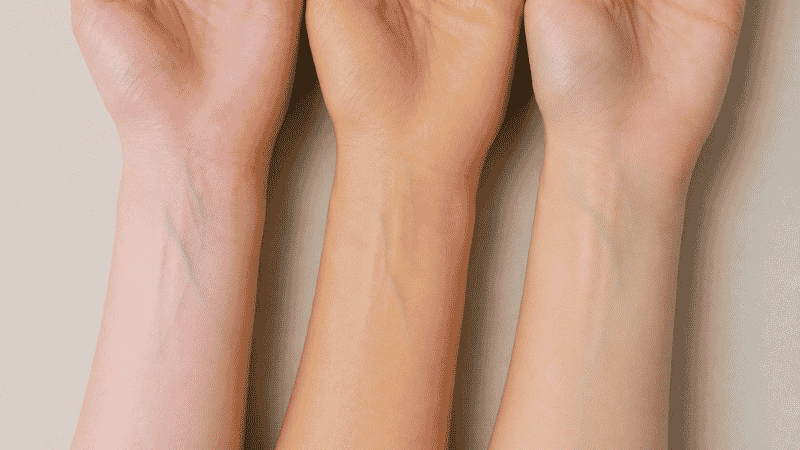
Cool undertone: Your skin has pink, red, or bluish hints. Your veins look blue or purple on the inside of your wrist. Silver jewelry tends to look more flattering on you. You tend to burn rather than tan. Foundations with cool or pink-toned pigments work best.
Warm undertone: Your skin has golden, peachy, or yellow hints. Your veins look green on the inside of your wrist. Gold jewelry tends to look more flattering. You tan relatively easily. Foundations with warm or yellow-toned pigments work best.
Neutral undertone: You have a mix of both warm and cool tones. Your veins look blue-green — somewhere in between. Both silver and gold jewelry look fine on you. Neutral foundations or those labeled “N” work well, but you also have the most flexibility with shade selection.
The vein test isn’t 100% definitive for everyone, but it’s the fastest starting point. If you genuinely can’t tell from your veins, there’s another method: look at what happens when you wear white versus off-white near your face. If pure white looks better, you likely have cool undertones. If off-white or cream looks better, you likely have warm undertones.
Editor’s note: I spent two years buying the wrong foundation because I didn’t understand undertones. Everything I tried looked “off” — slightly orange, slightly grey, never quite right. Once I figured out I was neutral-to-cool, the whole thing clicked into place. The undertone isn’t a minor detail. It’s the main event.
What Undertone Am I? The Quick Guide
Still not sure? Here’s the fastest way to figure it out:
Step 1: Look at the inside of your wrist in natural light (not yellow indoor lighting).
Step 2: Identify your vein color:
- Clearly blue or purple → cool undertone
- Clearly green → warm undertone
- Blue-green or you can’t tell → neutral undertone
Step 3: Cross-reference with how you tan:
- Burns easily, rarely tans → likely cool
- Tans easily, rarely burns → likely warm
- Somewhere in between → likely neutral
Step 4: Think about what jewelry looks best:
- Silver → cool undertone
- Gold → warm undertone
- Both look equally good → neutral
If 3 out of 4 of these point in the same direction, you’ve found your undertone. If they’re all over the place, you’re likely neutral.
How to Find Your Foundation Shade: The Correct Method
Now that you know your undertone, here’s how to actually test and match a shade.
Step 1: Narrow down your options using undertone.
Most foundation labels use letters to indicate undertone:
- C, R, or Pink = cool undertone
- W, Y, or Golden = warm undertone
- N or Beige = neutral undertone
Pick two or three shades in your depth range (fair, light, medium, tan, deep) that match your undertone.
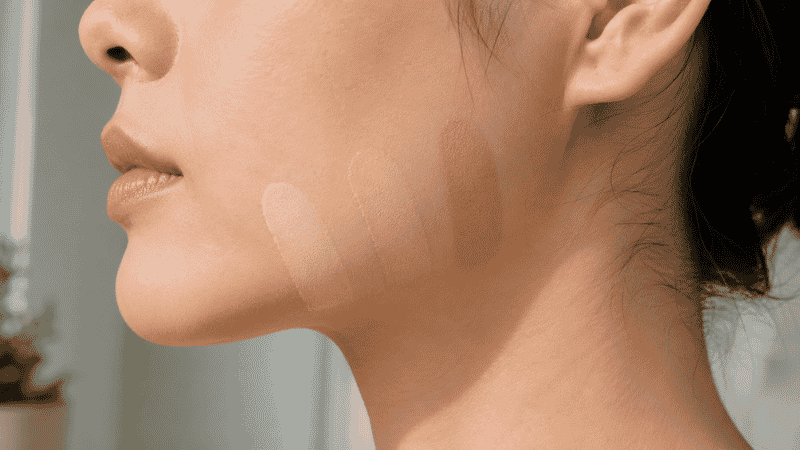
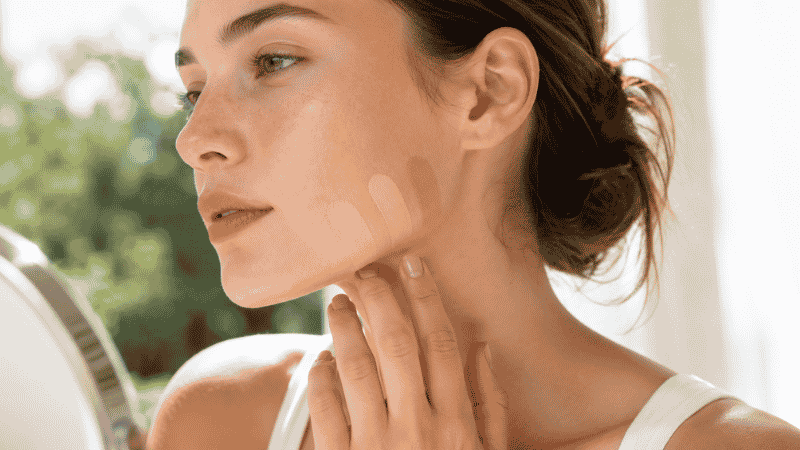
Step 2: Swatch on your jawline, not your hand.
Your hand is a different shade from your face — often with more redness, more tan, or a different undertone entirely. Your wrist is even further off. Always swatch foundation along the jawline, blending slightly downward toward your neck.
Apply thin stripes of two or three candidate shades side by side.
Step 3: Check in natural light.
This is non-negotiable. Store lighting — especially warm fluorescent lighting — masks orange tones and makes almost everything look better than it does outside. Walk to the store entrance, go outside, or hold your arm near a window. The shade that disappears into your skin — matching both your cheek color and your neck — is your match.
Step 4: Wait 15-20 minutes if you can.
Some foundations oxidize — they shift slightly warmer or darker after reacting with your skin’s oils and oxygen. If you’re buying in person and have time, apply the swatch and check again after 15-20 minutes to see if it’s shifted. This is especially important for formulas that are known to oxidize (more on this below).
Step 5: When in doubt, go slightly lighter.
A foundation that’s very slightly lighter than your skin can be warmed up with bronzer and blush and looks natural. A foundation that’s too dark or too orange is much harder to correct. When you’re choosing between two shades, the lighter one is the safer starting point.
Why Does My Foundation Look Orange?
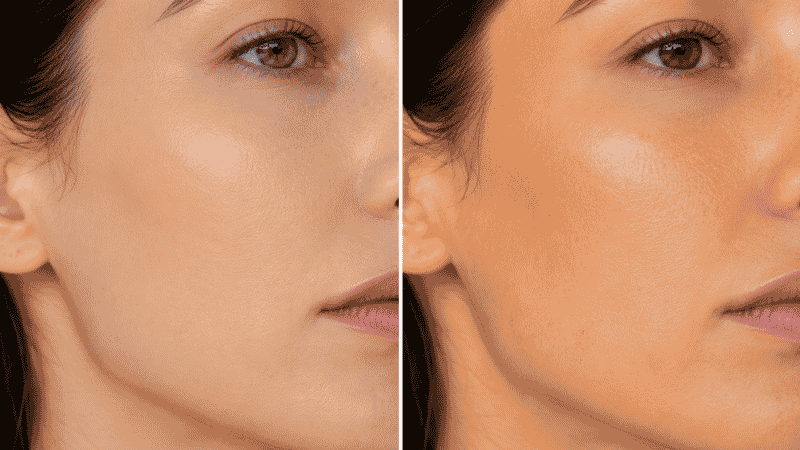
This is one of the most Googled foundation questions — and the answer is almost always one of two things: wrong undertone, or oxidation.
Wrong undertone: If your foundation looks orange immediately after application, you’re likely using a warm-toned formula when you have cool or neutral undertones. Orange is the result of warm yellow and red pigments against skin that reads cooler. The fix: switch to a foundation labeled cool or neutral, or go half a shade lighter (lighter shades typically have less warm pigment).
Oxidation: If your foundation looks fine when you apply it but turns noticeably more orange or darker 20-30 minutes later, that’s oxidation. It’s a chemical reaction between the foundation’s pigments and your skin’s natural oils and oxygen. It’s particularly common with certain formulas and on oily skin types.
How to fix oxidation:
- Go half a shade lighter than your matched shade — the oxidized result will land closer to your natural tone
- Look for foundations specifically labeled “oxidation-resistant” or “stable formula”
- The L’Oréal Infallible Fresh Wear Foundation (~$14) is consistently praised for minimal oxidation
- Using a primer before foundation creates a barrier that slows oxidation on oily skin
Should Foundation Match Your Face or Neck?
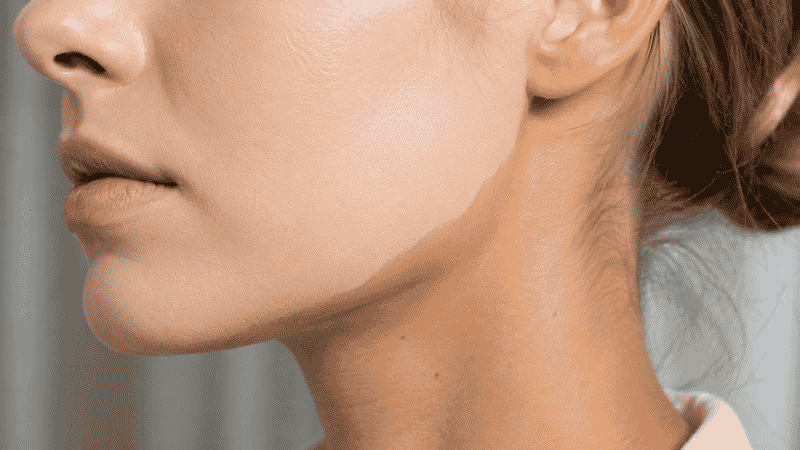
Ideally, both. The goal is seamless skin from your face down to your neck without a visible line at the jawline. If you can see exactly where your makeup ends, the shade is off.
In practice, most people’s faces are slightly lighter or darker than their necks depending on sun exposure patterns. The general guidance:
If your face is slightly lighter than your neck: Match to your neck — the slight warmth from your neck will naturally warm up your face foundation.
If your face is slightly darker than your neck: Match to your face and blend down toward the neck, using a tiny amount of foundation to feather the edge at your jawline.
The visible jawline line test: After applying foundation, look in natural light and turn your head slightly. If you can see a distinct line where foundation meets bare neck, you need either a slightly darker shade or better blending at the jawline.
How to Find Your Foundation Shade Online (Without Swatching)
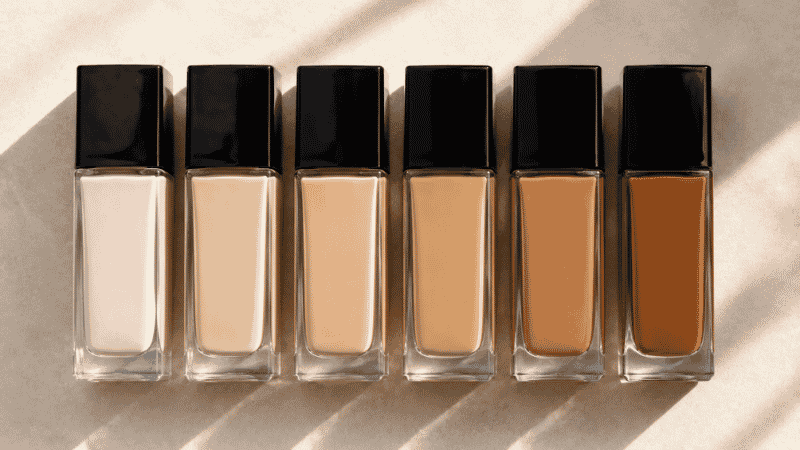
Buying foundation online without testing is genuinely tricky — but doable with these strategies.
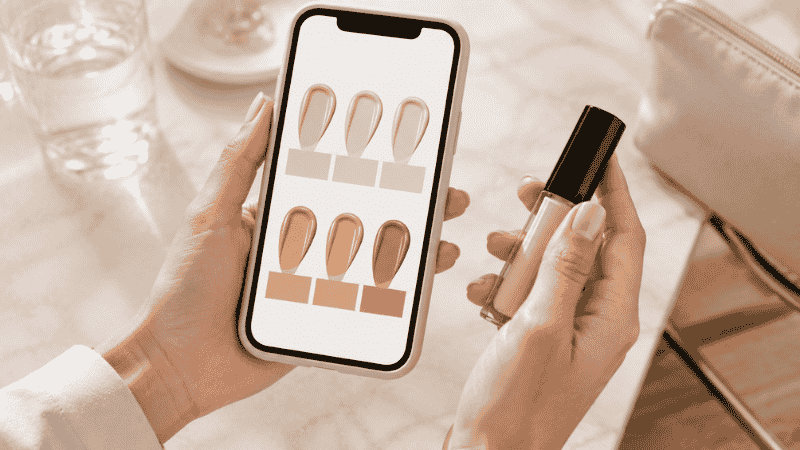
Use the brand’s shade finder tool. Most major brands (L’Oréal, Maybelline, Fenty) have online tools where you answer questions about your skin tone and undertone and get a shade recommendation. These are imperfect but give you a reasonable starting point.
Look for your shade in another product you already own. If you have a concealer, BB cream, or tinted moisturizer that matches perfectly, check what shade number it is. Many brands use consistent naming across their range — your Maybelline Fit Me Concealer shade often translates directly to the same number in the foundation.
Check YouTube swatches on similar skin tones. Searching “[foundation name] shade [your candidate shade] on [your skin tone description]” often surfaces swatches on real people. This is more accurate than the brand’s online swatch images.
Buy from retailers with easy returns. Target, Ulta, and most drugstores accept returns on opened makeup. Buy two candidate shades, test them at home in natural light, return the one that doesn’t match.
Foundation Shade Guide for Dark Skin Tones
Shade matching for deeper skin tones has specific challenges that lighter-skin-focused guides often skip entirely.
The undertone issue is amplified. On deeper skin tones, the wrong undertone shows up more dramatically — foundations that are too cool can look ashy or grey, foundations that are too warm look orange or muddy.
Oxidation is more noticeable. On deeper skin tones, oxidation that shifts a foundation one shade warmer is much more visible. Always wait 20 minutes after swatching before deciding.
Color correcting helps. For very deep skin tones, a small amount of orange or peach color corrector under foundation prevents the ashy grey look that can happen when even a “matching” foundation sits on melanin-rich skin.
Brands with the widest shade ranges for deep skin tones:
- Maybelline Fit Me Matte + Poreless — 40+ shades including excellent deep options
- L’Oréal True Match — specifically formulated with undertone notation (W/C/N) across all depths
- NYX Can’t Stop Won’t Stop — good depth range, competitive drugstore pricing
Drugstore Foundations with Great Shade Ranges
All available at Target, Walmart, Walgreens, or CVS. All returnable if the shade doesn’t work:
For oily skin: Maybelline Fit Me Matte + Poreless (~$8) — 40+ shades, stays matte, one of the widest drugstore shade ranges available
For dry skin: L’Oréal True Match Foundation (~$10) — labeled with W/C/N undertone markers, hydrating formula, excellent for beginners learning to shade match
For all skin types: NYX Can’t Stop Won’t Stop Full Coverage Foundation (~$14) — good depth range, non-comedogenic, buildable coverage
For a natural finish: e.l.f. Halo Glow Liquid Filter (~$14) — fewer shades but very accurate undertone labeling, gives a skin-tint level finish
For dark skin tones specifically: Maybelline Fit Me Dewy + Smooth (~$8) — same 40+ shade range as Matte version but with a more flattering dewy finish for deeper skin tones
What If You Still Can’t Find Your Shade?
Mix two shades. Buying the shade just above and just below where you think you fall and blending them gives you a custom match that might not exist in any single product.
Go to a counter. If drugstore shade matching isn’t working, visit a Sephora or Ulta where staff can help match you in person. The techniques you learn there translate directly to drugstore shade selection.
Try a foundation with a shade finder quiz. Some brands (Fenty, Armani) have developed online or in-person shade matching tools that are genuinely accurate — worth using before committing to a purchase.
FAQ
How do I find my foundation shade without going to the store?
Use the brand’s online shade finder tool, find swatches of your candidate shades on YouTube from someone with a similar skin tone, or buy two shades from a retailer with an easy return policy and test them at home in natural light at your jawline.
Why does my foundation look orange?
Two reasons: wrong undertone (you likely need a cooler or more neutral foundation), or oxidation (the foundation’s pigments are reacting with your skin’s oils and shifting warmer after application). For oxidation, try going half a shade lighter or switching to a formula labeled “oxidation-resistant.”
Should foundation match your face or neck?
Ideally both — the goal is a seamless blend with no visible line at the jawline. Match to your neck if your face is slightly lighter; match to your face and blend down if your face is slightly darker.
How do I find my undertone?
Look at your veins on the inside of your wrist: blue or purple = cool; green = warm; blue-green = neutral. Cross-reference with whether silver or gold jewelry looks more flattering on you, and whether you burn or tan easily.
What does undertone mean in foundation?
Undertone refers to the subtle underlying color in your skin — cool (pink/red), warm (yellow/golden), or neutral (a mix). Foundation undertones need to match your skin undertones, or the foundation will look orange (too warm), ashy (too cool), or just “off.”
The Right Shade Is Out There — It Just Takes the Right Test
Foundation shade matching gets easier every time you do it. The first time is the hardest because you’re learning your undertone, your depth, how your skin oxidizes, and how lighting affects color all at once.
Once you know your undertone and your approximate shade depth in one formula, you can translate that knowledge to almost any other foundation — the system is consistent across most brands.
Find your match on MyColorKiss:
- How to Apply Foundation for Beginners — once you have the right shade, here’s how to apply it
- Tinted Moisturizer vs Foundation — not sure if you even need foundation yet?
- Makeup Essentials for Beginners — the complete product guide including base products
- How to Get Clear Skin — because the best foundation base starts with good skin
And remember — finding your perfect foundation shade is a process, not a one-time event. Your skin changes with seasons, hormones, and age. Check in with your shade every few months and adjust as needed.