
Start here. Everything else follows from knowing what kind of skin you have.
Starting a skincare routine feels overwhelming for one specific reason: there are thousands of products, all claiming to be exactly what your skin needs, and none of them agree with each other. Oily skin is told to skip moisturizer. Dry skin is told to layer ten products. Acne-prone skin is told to use harsh actives that then dry everything out.
Here’s the shortcut through all of that noise: skincare only gets complicated when you’re using products designed for a different skin type than yours. Match the products to your actual skin, keep the routine simple, and your skin responds. Everything else is marketing.
This guide is the complete starting point for beginner skincare — covering how to identify your skin type, the correct order for applying products, and a simple morning and evening routine that works. It links to our in-depth guides for each skin type and concern when you’re ready to go deeper. Read this once and you’ll know exactly where to start.
Key Takeaways
- Skin type determines everything — the right moisturizer for oily skin will break out dry skin, and vice versa
- A beginner skincare routine needs only 3 steps: cleanser, moisturizer, SPF
- Skincare products take 4-8 weeks to show results — consistency matters more than which products you use
- Thinnest to thickest is the rule for layering: apply watery products before creamy ones
- The single most impactful skincare habit is daily SPF — it prevents more skin damage than any other product
Step 1: How to Know Your Skin Type
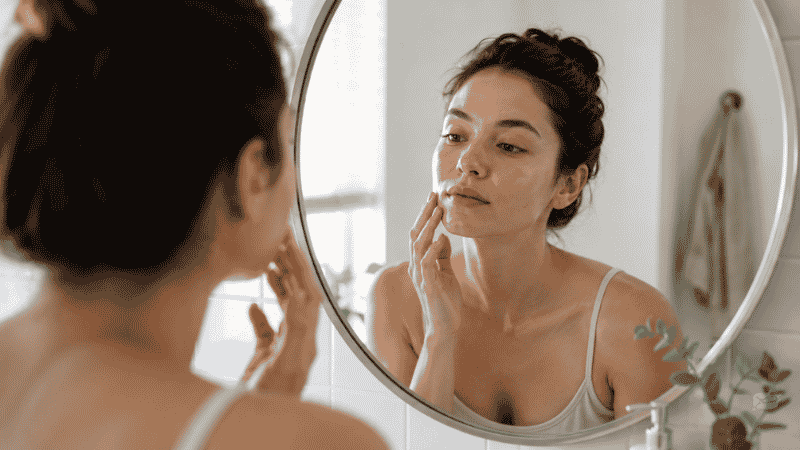
Before buying a single product, you need to know what type of skin you have. This takes about an hour and requires no tools.
The bare face test:
Wash your face with a gentle cleanser and pat dry. Don’t apply anything — no moisturizer, no toner, nothing. Wait 60 minutes, then look at your skin in natural light and notice how it feels.
What you’re looking for:
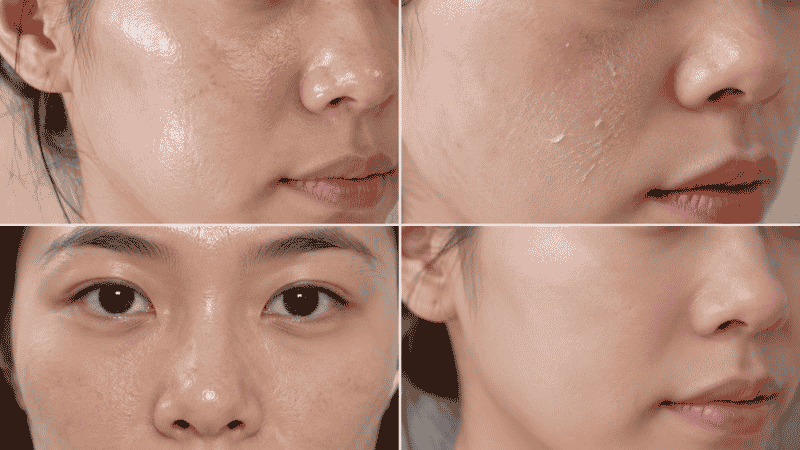
Oily skin: Your entire face — forehead, nose, chin, and cheeks — looks shiny and feels slightly greasy. Your pores are visible, particularly on your nose. Makeup tends to slide off within a few hours.
Dry skin: Your skin feels tight, possibly uncomfortable. You might see flakiness around the nose or cheeks. Fine lines look more pronounced. Your skin feels rough to the touch.
Combination skin: Your T-zone (forehead, nose, chin) is oily and possibly shiny, but your cheeks feel normal or slightly dry. This is the most common skin type.
Normal skin: Your skin feels comfortable, not tight or oily. Pores are minimal. Makeup wears reasonably well. Congratulations — this is the easiest skin type to work with.
Sensitive skin: Your skin reacts quickly to products — burning, stinging, redness, or flushing. It may not fit neatly into any of the above categories.
Once you’ve identified your skin type, everything that follows — cleanser choice, moisturizer texture, which actives to use — becomes significantly clearer.
The Correct Order to Apply Skincare Products
The order matters because each product is designed to work on a specific surface. Apply them in the wrong sequence and the active ingredients can’t penetrate, or thicker products block thinner ones from absorbing.
The universal rule: thinnest to thickest. Apply watery products before creamy ones. Water-based products can’t penetrate oil-based ones, so oils and creams always go last.
Morning Routine Order
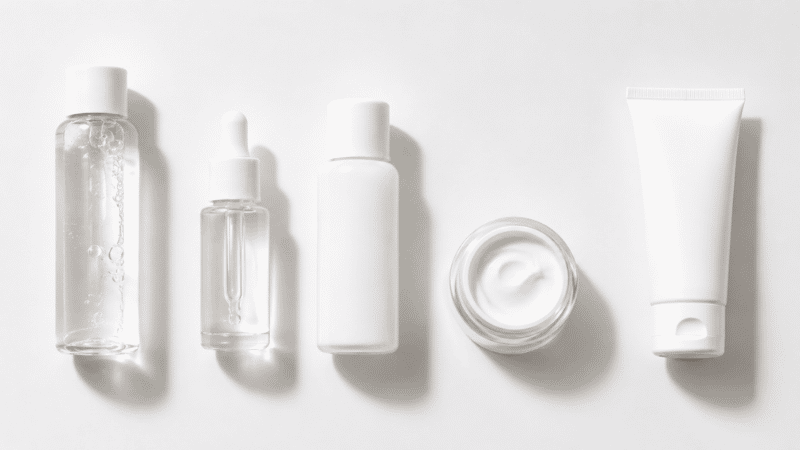
Cleanser → Toner (optional) → Serum (optional) → Moisturizer → SPF
For true beginners: cleanser, moisturizer, and SPF. That’s three products. That’s a complete morning routine.
Evening Routine Order
Makeup remover / cleansing oil → Cleanser → Toner (optional) → Treatment serum → Moisturizer
For true beginners: makeup remover (if you wore makeup), cleanser, moisturizer. Three products again.
Add serums, toners, and active treatments once you’ve been consistent with the basics for at least four weeks and your skin has stabilized.
The 3-Step Beginner Skincare Routine (Works for All Skin Types)
Regardless of your skin type, this is the foundation every routine is built on.
Step 1: Cleanser
Removes dirt, oil, sunscreen, and makeup from your skin. The most important rule: your skin should feel comfortable after cleansing — not tight, not squeaky, not stripped. If it feels any of those things, your cleanser is too harsh.
By skin type:
- Oily skin: Gel or foaming cleanser — CeraVe Foaming Facial Cleanser (~$14)
- Dry skin: Cream or milky cleanser — CeraVe Hydrating Cleanser (~$14)
- Combination skin: Gentle gel — La Roche-Posay Toleriane Purifying Cleanser (~$15)
- Sensitive skin: Fragrance-free milky formula — Vanicream Gentle Facial Cleanser (~$10)
Step 2: Moisturizer
Hydrates skin and reinforces the moisture barrier. Even oily skin needs moisturizer — skipping it causes dehydration, which triggers more oil production. The formula changes by skin type; the step doesn’t.
By skin type:
- Oily skin: Lightweight gel — Neutrogena Hydro Boost Water Gel (~$18)
- Dry skin: Rich cream — CeraVe Moisturizing Cream (~$16)
- Combination skin: Gel-cream — e.l.f. Holy Hydration! Face Cream (~$12)
- Sensitive skin: Fragrance-free cream — Vanicream Moisturizing Cream (~$14)
Step 3: SPF (Morning Only)
The single most evidence-backed skincare step available over the counter. Daily SPF prevents UV-related skin aging, hyperpigmentation, and skin cancer. Apply it every morning, after moisturizer, before makeup. No exceptions.
By skin type:
- Oily/acne-prone: Neutrogena Clear Face Liquid Lotion SPF 55 (~$14)
- Dry skin: Neutrogena Hydro Boost Moisturizing Sunscreen SPF 50 (~$15)
- Combination: CeraVe AM Facial Moisturizing Lotion SPF 30 (~$16)
- Deeper skin tones (no white cast): Black Girl Sunscreen SPF 30 (~$16)
Skincare Routine for Oily Skin
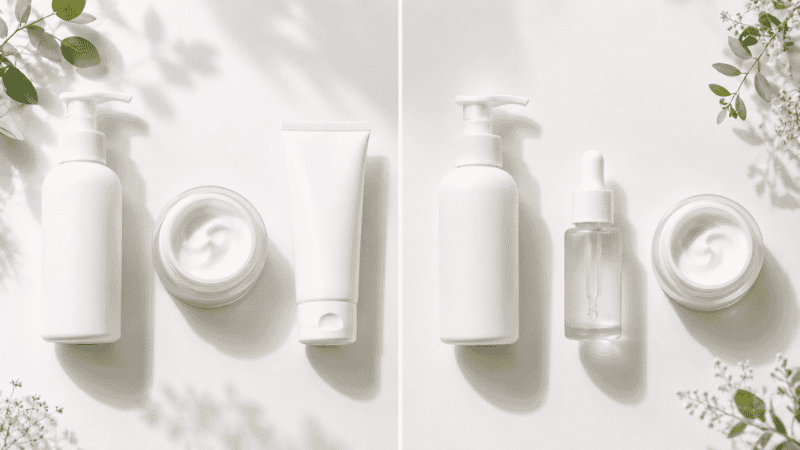
Oily skin produces excess sebum across the entire face, leading to shine, visible pores, and frequent breakouts. The biggest myth: that oily skin doesn’t need moisturizer. It does. Skipping it causes dehydration, which triggers even more oil production.
The key ingredients for oily skin:
- Salicylic acid — clears pores from the inside
- Niacinamide — regulates sebum production over time
- Oil-free, non-comedogenic formulas — hydrate without adding sebum
For the complete oily skin routine with morning and evening steps, product recommendations, and how to control shine throughout the day: Oily Skin Care Routine: Simple Steps That Actually Control Shine →
Skincare Routine for Dry Skin
Dry skin produces less sebum than average, leading to tightness, flakiness, and makeup that clings to dry patches. The fix isn’t just a richer moisturizer — it’s about the entire sequence, including applying products to slightly damp skin to lock in hydration.
The key ingredients for dry skin:
- Hyaluronic acid — draws water into skin (apply to damp skin only)
- Ceramides — repair and reinforce the moisture barrier
- Squalane — seals hydration in without adding greasiness
For the complete dry skin routine including the damp-skin technique, face oil recommendation, and why your moisturizer might not be working: Dry Skin Care Routine: Get Hydrated Glowy Skin Without Spending a Fortune →
Skincare Routine for Combination Skin
Combination skin is the most common skin type — oily T-zone, normal to dry cheeks — and the trickiest to treat as one unit. The key is zoning: adjusting how you apply products rather than using different products for each area.
The key approach for combination skin:
- Gel moisturizer across the whole face — hydrates without adding oil anywhere
- Niacinamide serum — addresses both oil regulation and hydration simultaneously
- Avoid heavy creams on the T-zone and alcohol-heavy toners anywhere
For the complete combination skin routine including the zoning technique and seasonal adjustments: Skincare Routine for Combination Skin: Balance Oily T-Zone and Dry Cheeks →
How to Get Clear Skin
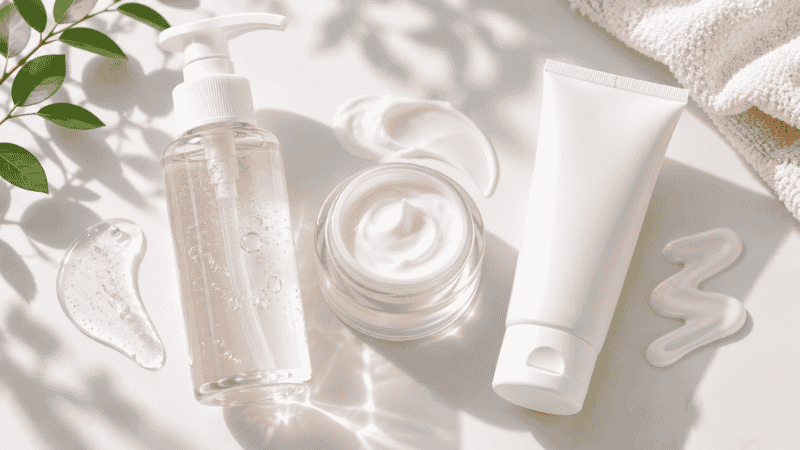
Clear skin is less about finding the right product and more about building the right routine — consistent, gentle, with one targeted active ingredient rather than six. The most common reason routines fail is introducing too many things at once.
The most effective OTC ingredients for acne:
- Salicylic acid — dissolves the oil-and-dead-skin buildup that causes clogged pores
- Benzoyl peroxide — kills the bacteria that turn clogged pores into inflamed breakouts
- Niacinamide — regulates oil and reduces post-acne marks over time
- Adapalene (Differin) — prescription-strength retinoid now available OTC
For the complete clear skin routine including how to choose your first active ingredient and when to see a dermatologist: How to Get Clear Skin: The Honest Guide That Actually Works →
Does Sunscreen Prevent Tanning?
SPF is the most skipped step in beginner skincare — and it’s also the most impactful one for long-term skin health, preventing dark spots, and slowing visible aging. Yes, you can still tan with sunscreen on. No, that doesn’t mean it’s not working.
What you need to know:
- SPF 30 blocks ~97% of UVB rays; SPF 50 blocks ~98% — the gap is smaller than most think
- How much you apply matters more than the number — most people use 25-50% of the recommended amount
- Reapplication every 2 hours during outdoor exposure matters as much as the morning application
- For makeup wearers: SPF in foundation isn’t enough — apply dedicated sunscreen underneath
For the complete SPF guide including how to reapply over makeup, which formulas don’t leave white cast, and drugstore picks for every skin type: Does Sunscreen Prevent Tanning? The Honest SPF Guide for Beginners →
How to Remove Makeup Properly
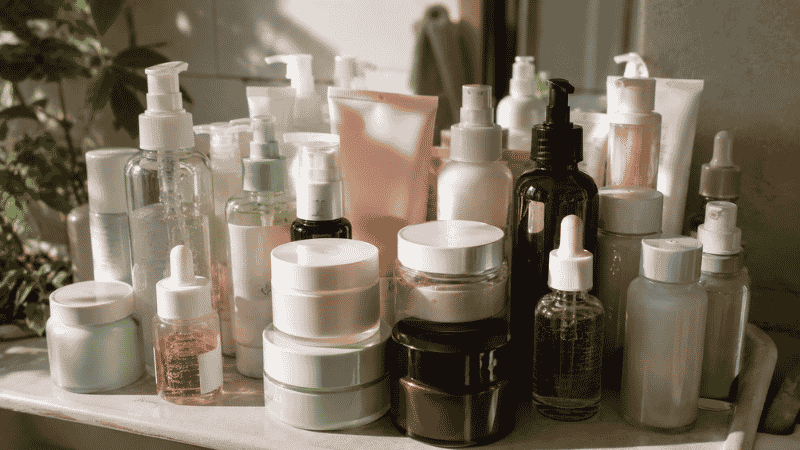
Makeup removal is the most skipped step in evening skincare — and consistently sleeping in makeup accelerates pore congestion, skin aging, and breakouts. Micellar water alone isn’t enough for days when you wore foundation and SPF.
What double cleansing means:
- Step 1: Oil-based product (cleansing balm, cleansing oil, or micellar water) dissolves makeup and sunscreen
- Step 2: Water-based cleanser removes the dissolved residue
This two-step process is the reason skincare professionals’ skin stays clear despite wearing heavy makeup daily — they remove it completely every night.
For the complete makeup removal guide including the 2-minute lazy-night version, how to remove waterproof mascara without losing lashes, and cleansing oil vs micellar water: How to Remove Makeup Properly: The Beginner’s Guide to Double Cleansing →
Skincare Routine Morning and Night: What’s Different
Your morning and evening routines serve different purposes — and they don’t need to be identical.
Morning routine purpose: Protect. You’re preparing your skin for the day — environmental exposure, UV rays, pollution. SPF is non-negotiable. Lighter serums and hydration are the focus.
Evening routine purpose: Repair. Skin cell turnover peaks overnight. This is when treatment products — retinol, AHA/BHA exfoliants, targeted serums — work most effectively. You also remove the day’s makeup and SPF completely.
What stays the same: Cleanser and moisturizer, morning and evening. These are the consistent anchors of every routine regardless of skin type or concern.
What changes:
- Morning gets SPF; evening doesn’t need it
- Evening can include treatment actives (retinol, exfoliants) that morning routines usually don’t
- Evening starts with makeup removal if you wore makeup or SPF during the day
Common Skincare Mistakes Beginners Make
Starting with too many products. Your skin can’t tell you what’s working. Start with three products for four weeks before adding anything.
Switching products too quickly. Most actives take 4-8 weeks to show meaningful results. If you switch after two weeks because “nothing is happening,” you’re not giving your routine time to work.
Using the wrong formula for your skin type. A matte moisturizer on dry skin, or a rich cream on oily skin, will undermine everything else you’re doing. Skin type match is more important than brand or price.
Skipping SPF because it feels heavy or greasy. There are SPF formulas for every skin type — gel formulas for oily skin, hydrating formulas for dry skin, tinted formulas for no white cast. Finding the right one is worth the effort.
Over-exfoliating. More is not better with exfoliation. 2-3 times per week maximum for chemical exfoliants. Over-exfoliating breaks down your skin barrier and causes reactivity, breakouts, and sensitivity.

How Long Until You See Results?
Skin cell turnover takes approximately 28 days — which means visible changes from a new routine typically take 4-8 weeks to become noticeable. This is one of the most important things to understand as a beginner, because it’s also the most discouraging.
Week 1-2: Your skin is adjusting. You might notice slight changes, or you might notice new breakouts (a normal purging response to some actives). Don’t change anything.
Week 3-4: Texture and hydration improvements often become visible first.
Week 6-8: Tone evenness, pore appearance, and more significant improvements become noticeable.
Give any new routine 8 weeks before evaluating whether it’s working.
FAQ
How do I know my skin type?
Wash your face, apply nothing, and wait 60 minutes. If your whole face is shiny — oily. If it feels tight or flaky — dry. Shiny T-zone with normal or dry cheeks — combination. Comfortable and unremarkable — normal.
What skincare products do beginners need?
Three: a gentle cleanser, a moisturizer suited to your skin type, and SPF 30 or higher. Everything else — serums, toners, exfoliants — is optional and should be added one at a time after you’ve established a consistent basic routine.
What order do you apply skincare?
Thinnest to thickest: cleanser first, then toner (optional), serum, moisturizer, and SPF last in the morning. In the evening: makeup remover (if needed), cleanser, serum, moisturizer.
How many skincare steps do I actually need?
Three is genuinely sufficient: cleanser, moisturizer, SPF. More steps add benefits but also complexity — and complexity leads to inconsistency. A 3-step routine done every day beats a 10-step routine done occasionally.
Should I use different skincare products morning and night?
Not necessarily different products, but different routines. Morning focuses on protection (SPF essential). Evening focuses on repair (treatment actives, thorough makeup removal). Cleanser and moisturizer stay consistent morning and night.
Your Skincare Routine Starts With Three Products
The most sophisticated skincare routine in the world doesn’t outperform a simple, consistent routine done every day. Cleanser, moisturizer, SPF. Applied in the right order. Matched to your skin type. Done consistently for at least eight weeks.
That’s the whole foundation. Add to it slowly. Listen to what your skin is telling you. And come back to the in-depth guides whenever you’re ready to go further.
Your MyColorKiss skincare toolkit — everything linked, nothing left out:
- Oily Skin Care Routine →
- Dry Skin Care Routine →
- Skincare Routine for Combination Skin →
- How to Get Clear Skin →
- Does Sunscreen Prevent Tanning? →
- How to Remove Makeup Properly →
- Natural Makeup Look Tutorial →
- Makeup Essentials for Beginners →
And remember — the best skincare routine is the one you’ll actually do every day. Start simple. Stay consistent. Your skin will respond.